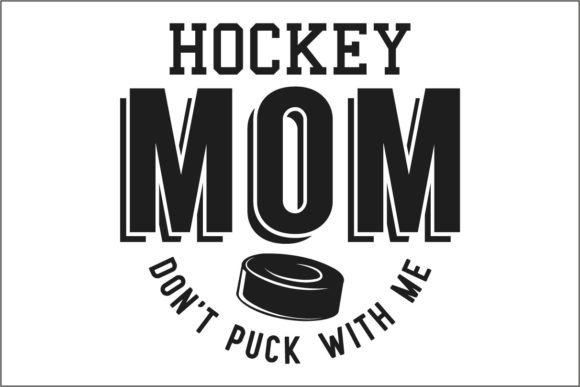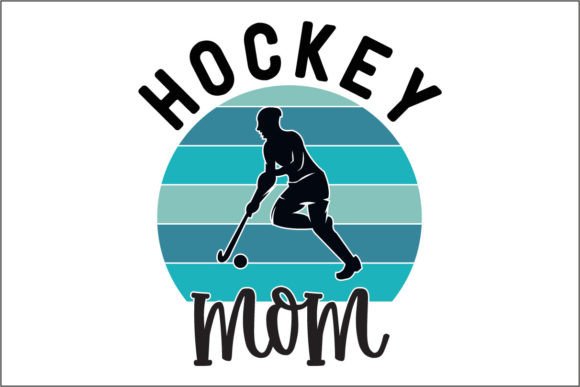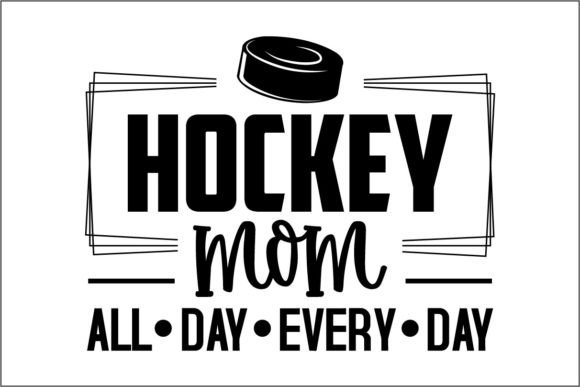
Hockey Mom All Day Every Day
First Impressions: Warm, Witty, and Ready for Real Life
When I opened Hockey Mom All Day Every Day for the first time, I didn’t see just another graphic—I saw a mood. It’s got that effortless charm you rarely get in vector-based embroidery files: clean lines, balanced negative space, and a visual rhythm that feels both playful and grounded. The layout leans into friendly symmetry—no aggressive angles or cramped lettering—and the theme lands with sincerity, not sarcasm. This isn’t irony dressed as affection; it’s genuine pride, stitched with care. As a designer who’s digitized hundreds of mom-themed pieces, I immediately pictured it on a soft-loop cotton sweatshirt for a local rink-side boutique—or on a linen tea towel hanging in a hockey dad’s kitchen.
A Real Project Test: Embroidering It on a Canvas Tote Bag
Last week, I used Hockey Mom All Day Every Day to embroider a medium-weight canvas tote for a client’s holiday pop-up stall. She wanted something “proud but not loud,” and this design delivered. On the bag, the letterforms held crispness without stiffness—the curves softened just enough to feel handmade, not machine-perfect. The stitch density felt moderate: no heavy fill-stitch flooding, no fragile satin-stitch edges that snagged during hooping. It stitched cleanly at 8.5” wide, and the central motif scaled beautifully when resized down to 4.25” for a matching baby onesie (yes—I tested it there too). Customers paused at the booth. Not because it shouted, but because it resonated. That quiet recognition? That’s the difference between decoration and connection.
Where It Shines—and Where It Needs Thought
Hockey Mom All Day Every Day thrives on stable, medium-to-heavy fabrics: canvas totes, fleece-lined hoodies, twill aprons, and structured caps. Its open spacing and generous letter weight translate well to sweatshirt embroidery and embroidered patch production. On baby embroidery projects—think organic cotton burp cloths or gauzy swaddle blankets—I recommend using a lightweight tear-away stabilizer and reducing top tension slightly to avoid puckering. For holiday embroidery or personalized gifts like pillow covers and nursery decor, it reads warmly even at smaller sizes (down to ~3.5”), though I’d avoid going smaller than that on textured surfaces like terry cloth towels.
Proceed with extra attention on stretchy knits, thin poly-blend tees, or dark fabric backgrounds. The design’s charm relies partly on contrast—so if you’re stitching on navy or charcoal, test thread colors thoroughly. Black-on-black won’t read. Likewise, curved surfaces like baseball caps demand careful digitizing adjustments (if you’re modifying the file), since the original appears optimized for flat or gently contoured surfaces—not high-crown curves.
What It Adds to Your Finished Product—Beyond the Stitch
This isn’t just about legibility or hoop compatibility. Hockey Mom All Day Every Day quietly elevates perceived value. On an Etsy listing, it helps your handmade product feel intentional—not generic. Buyers trust designs that look professionally balanced, and this one does: consistent stroke weight, thoughtful kerning, and no awkwardly tight corners where satin stitches bunch or running stitches disappear. It supports brand consistency for small shop owners who sell coordinated collections (e.g., matching mom-and-kid apparel or rink-day bundles). And because it avoids over-detail—no tiny stars, no micro-shading—it holds up through repeated washing, which matters deeply for custom apparel and baby embroidery meant to last seasons.
Practical Notes Every Embroidery Designer Should Check
- Test first on scrap fabric matching your final product’s weight and weave—especially for textured or stretchy substrates.
- Review stitch density before scaling. If enlarging beyond 10”, check for unintended fill-stitch buildup in solid areas.
- Confirm hoop size fits your intended placement—this design works best centered or left-aligned on chest or upper back positions.
- Inspect small details at 200% zoom: ensure no overlapping vector paths could cause double-stitching or thread breaks.
- Mock it up in black and white to verify readability on light and dark fabric backgrounds.
- Use appropriate stabilizer: cut-away for knits, tear-away for stable wovens, fusible for lightweight linens.
- Verify licensing before selling finished products or digital embroidery files—this is essential for Etsy sellers and craft business owners.
Why It Fits Seamlessly Into Your Design Workflow
As a T-Shirt Designs asset, Hockey Mom All Day Every Day bridges categories gracefully. It reads clearly as a standalone graphic, but its vector foundation means it adapts well to applique design workflows or layered embroidery techniques. I’ve repurposed parts of it—like the “All Day” curve—as a standalone monogram accent on a set of embroidered kitchen towels. Its versatility doesn’t come from complexity, but from clarity. That’s rare. Most graphics labeled “versatile” sacrifice personality for flexibility. This one keeps both.
For digital product sellers, it’s a strong candidate for curated bundles—pair it with subtle hockey-puck icons or minimalist skate silhouettes, and you’ve got a cohesive, commercially viable collection. For hobbyists and makers, it’s forgiving enough for first-time digitizing experiments but polished enough to hold its own in professional commercial embroidery runs.
The Bottom Line: Charm With Craftsmanship
Hockey Mom All Day Every Day earns its place in my active design library because it balances warmth and wearability. It doesn’t try to be everything—it knows its voice, its audience, and its ideal fabric. Whether you’re stitching a single personalized gift or prepping 50 units for a craft fair, this design supports your intention instead of competing with it. It’s the kind of Graphics asset that makes your work feel more human—not less.