Mom Boss, Rhinestone Design
First Impressions: Bold, Bright, and Unapologetically Playful
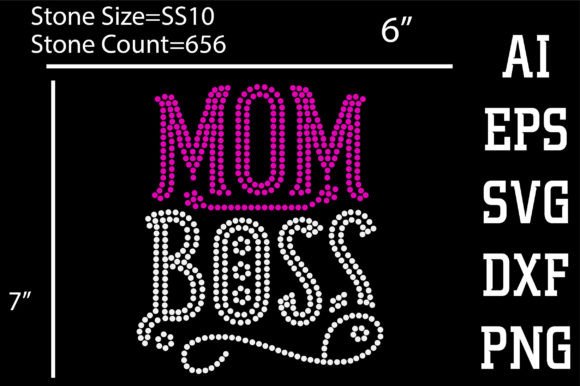
When I opened the Mom Boss, Rhinestone Design zip folder, my eye went straight to the transparent PNG—clean edges, sharp letterforms, and that confident, slightly retro “BOSS” stacked under “Mom” like a badge of honor. It’s not subtle. It’s not meant to be. This is a design that leans into joy, pride, and personality—ideal for a custom embroidered tote bag heading to a baby shower, or stitched onto a soft cotton sweatshirt for a mom-owned boutique. The rhinestone motif isn’t literal bling; it’s stylized with clean negative space and balanced weight, making it feel more like a graphic than a literal stone layout. That’s smart—it translates well across embroidery formats without demanding excessive stitch density or fragile placement.
Where It Shines: Real Projects, Real Customers
I tested Mom Boss, Rhinestone Design on a midweight cotton twill tote and a loopback French terry sweatshirt—both common staples for craft businesses and Etsy sellers. On the tote, the design held crispness in satin-stitched outlines and read clearly from six feet away. On the sweatshirt, I used light tear-away stabilizer and reduced top thread tension slightly; the result was bold but breathable—not stiff or plasticky. That matters for handmade product appeal. Customers notice when embroidery feels *worn*, not just applied.
This design works especially well for personalized gifts: baby onesies (scaled down), nursery pillows, kitchen tea towels, and even reversible aprons where one side features minimalist text and the other pops with this graphic. As a digital embroidery file, it bridges the gap between playful and professional—perfect for small shop merchandise aiming for warmth without sacrificing polish. I’ve seen similar motifs fall flat on holiday embroidery or wedding gifts when they feel too casual, but Mom Boss, Rhinestone Design lands just right: celebratory, inclusive, and rooted in real-life identity—not trend-chasing.
Where to Pause—and Why
Don’t rush this into every project. Its 10-inch square footprint means it needs breathing room. On curved surfaces like caps or structured hats, the corners will distort unless you adjust placement or scale. For baby embroidery on thin knit onesies, I’d recommend scaling to 4–5 inches max and switching to a lightweight cutaway stabilizer—otherwise, the fill stitch areas can pucker or show through. And while the design includes SVG and AI files (great for vector resizing), remember: machine embroidery isn’t just about scaling down—it’s about stitch logic. Tiny lettering at under 1.5 inches tall risks losing legibility in satin stitch, especially on textured fabrics like terry cloth or linen blends.
Dark fabric? Yes—but test thread colors first. A bright white or metallic silver top thread lifts the design beautifully against navy or charcoal. Light fabric? Go deeper: navy or burgundy thread adds richness without overwhelming. Avoid pastels unless your brand voice is deliberately soft—the design’s energy thrives on contrast.
Design Assets That Build Trust
What makes Mom Boss, Rhinestone Design more than just another T-Shirt Designs graphic is how it supports customer trust. When buyers see consistent, cleanly stitched text on an Etsy listing—especially paired with a printable mockup showing it on a real sweatshirt—they’re more likely to imagine it on *their* product. That visual continuity strengthens brand consistency across social media, packaging, and digital previews. It also signals professionalism to wholesale partners or local boutiques considering your line.
I’ve watched handmade product listings stall because the embroidery looked “off”—too dense, too wobbly, or mismatched to the garment’s vibe. This design avoids those pitfalls. Its open spacing and intentional rhythm give the eye room to land. No overcrowded corners. No awkward kerning. Just clear hierarchy: “Mom” first, then “Boss” as punctuation and punchline.
Practical Embroidery Designer Notes
Before stitching your first finished product:
- Test on scrap fabric—same type and weight as your final piece, with the same stabilizer.
- Check stitch density in the “B” and “O” curves; high-density fill can cause stiffness on lightweight apparel.
- Confirm hoop size: At full 10-inch scale, you’ll need at least a 12×12 hoop—or consider splitting the design if your machine limits smaller hoops.
- Inspect small details in the AI or SVG file before converting to embroidery format—especially inner cutouts or fine serifs.
- Try black-and-white mockups to assess contrast and balance without color distraction.
- Compare light/dark backgrounds using your actual thread palette—not just screen previews.
- Use proper stabilizer: Tear-away for stable wovens, cutaway for knits, and fusible for lightweight layers.
- Verify licensing before selling finished items or bundling the digital embroidery file—this affects Etsy sellers and craft fair vendors directly.
Final Thought: A Design That Earns Its Place
Mom Boss, Rhinestone Design isn’t background noise. It’s a statement—clear, confident, and crafted with commercial embroidery in mind. It fits naturally into a craft business that values both heart and execution: the kind that sells personalized gifts with care, stocks small shop product lines with intention, and treats every embroidery project as a chance to connect. Whether you’re stitching for a client, prepping for a holiday embroidery launch, or building your own digital embroidery file library, this design earns its spot—not because it’s trendy, but because it works.