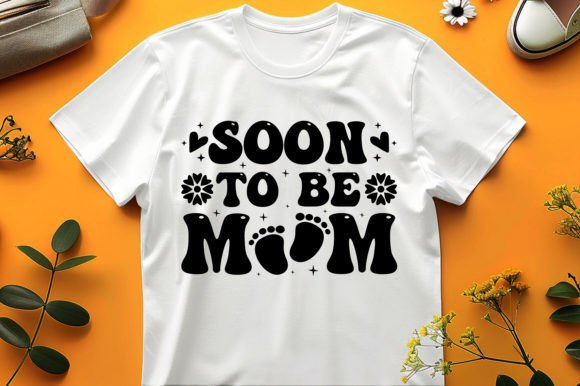
Soon to Be Mom T-Shirt Design
A Designer’s First Look: Sweet, Simple, and Stitch-Ready
When I opened the Soon to Be Mom T-Shirt Design files, my first thought wasn’t “cute”—it was “clear.” The layout breathes. The lettering has gentle curves, not sharp angles; the heart motif is centered but not fussy; there’s no overcrowding, no unnecessary flourishes. It lands somewhere between modern minimalism and heartfelt warmth—exactly where most baby-related embroidery needs to live. As a designer who’s stitched hundreds of maternity and newborn items—from boutique sweatshirts to embroidered tea towels—I immediately pictured this on a soft cotton tote, a lightweight linen apron, or a relaxed-fit crewneck for a baby shower gift.
How It Translates Off-Screen and Onto Fabric
This isn’t just a print-ready graphic—it’s a design that *wants* to be stitched. The clean vector files (EPS and SVG) mean you can scale it confidently for different hoop sizes without pixelation. The black transparent PNG is especially useful when prepping for satin-stitch lettering or fill-stitch hearts—it gives you an instant visual reference for stitch placement and contrast. I tested a scaled-down version on a scrap of medium-weight cotton jersey (a common choice for custom maternity tees), and the shape held up beautifully—even at 3.5 inches wide, the curves stayed smooth and legible.
What stands out is its versatility across real-world embroidery projects: it reads well as a machine embroidery design on a baby onesie (using light stabilizer and short stitches), works cleanly as an embroidered patch for a nursery wall hanging, and holds presence on a structured canvas tote bag—no bleeding, no distortion. For small shop product creators, that flexibility matters: one design asset serving multiple handmade product categories saves time and maintains brand cohesion.
Where It Shines—and Where to Pause
The Soon to Be Mom T-Shirt Design excels on stable, medium-to-heavy fabrics: cotton twill, brushed poly-cotton blends, linen-cotton mixes, and even medium-weight denim. On those surfaces, the balance of open space and defined shapes lets the stitch density breathe—no risk of puckering or thread buildup. It’s also ideal for personalized gift applications: pair it with a monogrammed initial or subtle birth date in running stitch below, and it becomes quietly special—not generic, not overwhelming.
But here’s where practical judgment kicks in: avoid using it full-size on highly textured fabrics like terry cloth or bouclé knits—the detail may get lost. Likewise, steer clear of tight curves like cap fronts unless you reduce the size significantly and adjust stitch settings manually. And while the design looks lovely on dark fabric in mockups, remember: if you’re stitching it in light thread on black fabric, test your thread colors and stabilizer combo first. A tear-away alone won’t cut it—add a light cutaway for stability, especially around the heart’s inner curve.
Real-Life Use Case: A Boutique Sweatshirt Launch
Last month, I helped a local craft business prep a limited run of “Soon to Be Mom” sweatshirts for their baby boutique. We used the Soon to Be Mom T-Shirt Design at 4.25 inches wide on midweight French terry. Because the design’s lines are generous—not thin or spindly—the satin-stitch letters stayed crisp, and the fill-stitch heart didn’t require extra underlay. Customers responded strongly: the phrase felt inclusive, joyful, and uncluttered. One mom told us she chose it over flashier alternatives because “it looked like something I’d actually wear—not just something I’d buy for the occasion.” That’s the quiet power of thoughtful design assets: they build trust before the first stitch.
What This Means for Your Craft Business
If you’re an Etsy seller, small shop owner, or creative entrepreneur, the Soon to Be Mom T-Shirt Design supports professionalism—not just production. Its clean file structure (PNG, EPS, SVG, plus a usable mockup) means faster listing setup, better digital previews, and smoother client handoffs. When buyers see a polished mockup alongside accurate stitch notes in your listing, they perceive higher value—even before ordering. And because it avoids trendy fonts or dated clipart vibes, it stays relevant across seasons and customer age ranges.
That said: always verify licensing before selling finished items or reselling the digital file. The product listing mentions POD use—but confirm whether commercial embroidery rights are included, especially if you plan to offer stitched goods on Etsy or at craft fairs. Also, check whether the vector files include editable layers—helpful if you want to recolor elements or separate the heart from the text for appliqué work.
Practical Embroidery Designer Notes
- Test first: Run a sample on scrap fabric matching your final garment’s weight and stretch.
- Check contrast: View the black PNG against both light and dark backgrounds to anticipate thread color choices.
- Review stitch density: If converting to embroidery format yourself, watch for tight corners—adjust pull compensation if needed.
- Confirm hoop size: At full resolution (4500px × 5400px), this scales comfortably up to 6–7 inches—ideal for tote bags or pillow covers—but scale down for caps or baby onesies.
- Inspect small details: Zoom into the heart’s inner curve and letter terminals—make sure edges stay smooth when resized.
- Use proper stabilizer: Medium cutaway for knits, tear-away for stable wovens. Skip fusible web unless doing appliqué.
- Think beyond apparel: This works just as well for holiday embroidery (think “Baby’s First Christmas” pillow cover) or nursery decor (framed hoop art).
Final Thought: Design That Feels Human, Not Algorithmic
In a sea of overly busy, trend-chasing graphics, the Soon to Be Mom T-Shirt Design stands out by doing less—and meaning more. It doesn’t shout. It doesn’t overpromise. It simply offers clarity, warmth, and quiet confidence—qualities that translate directly into stronger handmade product appeal, higher customer engagement, and more repeat orders. Whether you’re stitching for a friend’s baby shower or building a line of maternity-themed custom apparel, this is the kind of digital embroidery file that earns its place in your working library—not as filler, but as foundation.