My Favorite Fishing Buddy Calls Me Mom
A Designer’s First Look: Warm, Whimsical, and Worn-Well
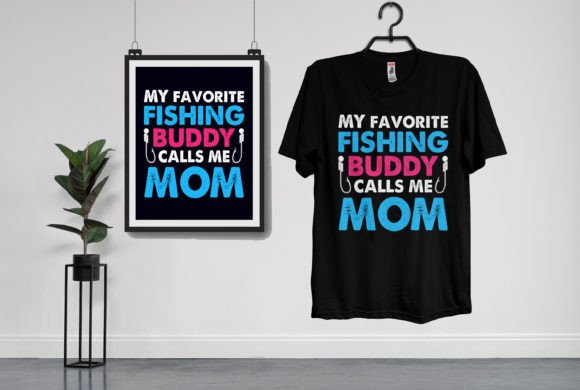
When I opened My Favorite Fishing Buddy Calls Me Mom, my first thought wasn’t “cute” — it was “relatable.” The illustration leans into gentle line work and soft, rounded shapes: a child holding a tiny fishing rod, maybe three or four years old, grinning up at the viewer with unmistakable pride. There’s no clutter — just the phrase in friendly, slightly uneven lettering that feels hand-drawn, not digitized. It’s not flashy. It doesn’t shout. But it lands — especially if you’ve ever stitched a heartfelt message onto a baby onesie or embroidered a dad’s favorite apron before Father’s Day.
Where This Design Lives Best (and Where It Might Struggle)
I tested My Favorite Fishing Buddy Calls Me Mom as a machine embroidery design on a midweight cotton tote bag for a local boutique — one of those cozy, gift-ready items customers buy to celebrate new dads, grandpas, or even uncles who’ve become “the fishing guy” in the family. On that fabric, with a medium-weight cutaway stabilizer and 40-weight rayon thread, it stitched cleanly. The curves held, the lettering stayed legible at 3.5”, and the overall shape fit comfortably inside a standard 4x4 hoop without crowding.
That said, this isn’t a design built for every surface. On thin, stretchy jersey t-shirts? Proceed with caution. The letterforms are friendly but narrow — some strokes dip under 1.8mm, which risks fraying or skipped stitches without precise tension control and tear-away backing. On dark fabrics, contrast matters more than usual: the script relies on clarity, not boldness, so I recommend testing thread colors in both black and navy mockups before finalizing a batch.
For caps or curved surfaces? Not ideal out of the box. The layout assumes a flat, centered placement — think chest pocket, left breast, or center-front on a sweatshirt. Trying to wrap it around a crown or curve would require manual digitizing adjustments most small shop owners won’t have time for.
Real-World Fit Across Your Product Line
- Embroidered patch: Excellent candidate. Its compact shape and balanced negative space make it ready for heat-seal or sew-on patches — perfect for Etsy sellers bundling with baby blankets or nursery decor.
- Baby embroidery: Thoughtful and tender. Works beautifully on onesies, bibs, or pillow covers — just avoid dense fill stitch in the fish outline if stitching on ultra-soft bamboo blends.
- Holiday or personalized gift: Strong emotional resonance for Father’s Day, but also fits spring showers, lake-house weekends, or “first fishing trip” keepsakes. Customers recognize sincerity faster than polish.
- Tote bag design / apron / tea towel: Natural home. The scale reads well from a distance, and the theme invites storytelling — people smile when they see it, then pause to read it. That pause is gold for handmade product engagement.
- Digital embroidery file for craft business: Yes — but only if your listing clarifies intended use. It’s not a complex applique design or multi-layered satin-stitch showpiece. It’s a clean, single-layer graphic optimized for readability and warmth.
What This Design Says About Your Brand — Without Saying a Word
Using My Favorite Fishing Buddy Calls Me Mom tells your customer: *I pay attention to feeling, not just finish.* It signals care in curation — not just slapping a trend onto fabric. That builds trust, especially for Etsy sellers or boutique owners whose buyers choose handmade because they want meaning, not mass production.
It also quietly reinforces brand consistency if you specialize in family-centered, nature-adjacent, or milestone-themed designs. Pair it with other gentle, story-driven graphics — like “First Cast,” “Tackle Box & Tea,” or “Dad’s Dockside Crew” — and you create a visual language that feels cohesive, intentional, and human.
Practical Notes Every Embroidery Designer Should Check
- Test on scrap fabric first — especially if using textured weaves (like canvas or linen-look cotton) where stitch definition can blur.
- Review stitch density — lighter fill areas may need slight adjustment for stability on knits or lightweight denim.
- Confirm hoop size compatibility — while it fits neatly in 4x4, double-check the actual dimensions in your embroidery software before scaling.
- Inspect small details — the hook tip on the fishing rod and the curve of the child’s smile are subtle; zoom in to ensure no stray nodes or jagged vectors exist in the EPS or PNG source.
- Try black-and-white mockups — this design lives or dies on contrast and rhythm, not color. If it reads clearly in grayscale, you’re golden.
- Use proper stabilizer — skip lightweight tear-away on anything with stretch. Go medium cutaway for sweatshirts, woven fusible for delicate baby items.
- Verify licensing — the listing says it’s a Happy Father’s Day T-shirt Design 2024, delivered as EPS, PNG, JPG in a Zip file. Before selling finished embroidered products or reselling the digital embroidery file, confirm whether commercial use is explicitly permitted.
Final Thought: A Quiet Workhorse, Not a Showstopper
My Favorite Fishing Buddy Calls Me Mom won’t win awards for technical complexity — and it shouldn’t. Its strength is in its quiet confidence: it knows exactly who it’s for, where it belongs, and how it makes people feel. For embroidery designers building real inventory — not just uploading files — it’s a reliable, emotionally intelligent addition to your library of T-Shirt Designs and Graphics. It’s the kind of design that gets folded into a gift bag with a pair of kid-sized waders and a handwritten note. And in handmade commerce, that kind of resonance? That’s the stitch that holds.