Mama Mommy Mom T-Shirt Design
First Impressions: Warm, Clear, and Ready for Real Stitching
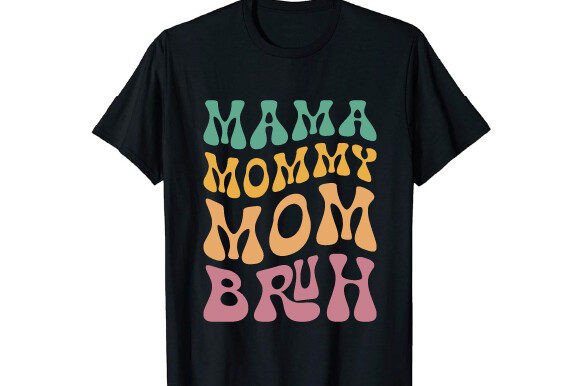
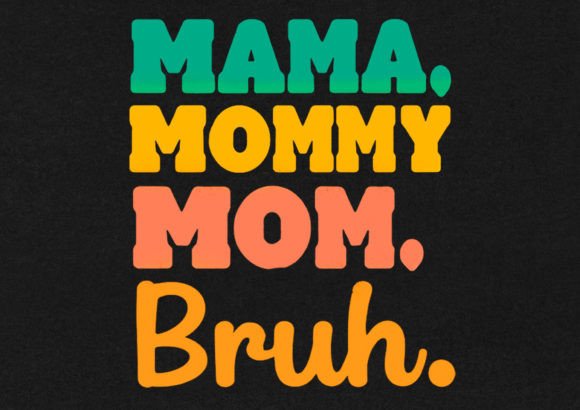
When I opened the Mama Mommy Mom T-Shirt Design, what struck me first wasn’t just the layout—it was the quiet confidence in its simplicity. Three words stacked vertically, clean sans-serif lettering with subtle rounded edges, balanced spacing, and a gentle rhythm that feels handwritten but polished. It doesn’t shout. It leans in—warm, grounded, and unmistakably maternal. That’s rare in a genre crowded with cutesy fonts or over-embellished script. As an embroidery designer who’s stitched hundreds of “mom” motifs for baby blankets, boutique aprons, and personalized tote bags, I immediately pictured this on a soft cotton canvas tote—no frills, no extra flourishes, just honest, wearable sentiment.
A Design That Breathes on Fabric
I tested the Mama Mommy Mom T-Shirt Design on a medium-weight unbrushed cotton sweatshirt—exactly the kind my local craft fair customers love for spring markets. The clean lines translated beautifully into satin stitch outlines and smooth fill stitch bodies. No jagged edges. No overcrowded corners. Because it’s built as a graphic (not a dense vector-heavy illustration), stitch density stays moderate—critical when you’re embroidering on knit fabrics that shift under tension. On a curved surface like a cap brim? I’d recommend repositioning the design slightly lower and using a tear-away + cut-away stabilizer combo—but yes, it works. Not perfectly flat, but thoughtfully adaptable.
Where This Design Truly Shines
- Personalized gifts: Embroidered on a linen pillow cover or tea towel, it reads clearly at 3.5" tall—ideal for nursery decor or Mother’s Day bundles.
- Small shop merchandise: Paired with neutral-toned apparel (heather grey tees, oatmeal hoodies), it elevates handmade presentation without competing with branding.
- Etsy listings: The included PNG mockups let you show realistic context fast—no need to build custom scenes from scratch. Buyers instantly “see” it on a mug, a cap, or a banner.
- Baby embroidery: Sized down to 2.75", it holds legibility on onesies—even with light stabilizer and low-density fill. No tiny serifs to vanish in stitching.
- Holiday and wedding gifts: When stitched in ivory thread on charcoal twill, it gains quiet elegance—perfect for “Mother of the Bride” aprons or keepsake towels.
Use With Intention—Not Everywhere
This isn’t a one-size-fits-all embroidery file. Its strength is clarity—not complexity—so it’s less ideal for projects demanding fine detail. Avoid it on:
- Ultra-small hoops (<4" diameter) unless scaled carefully—tight curves in the “M” and “y” can lose definition below 2.25".
- Highly textured fabrics like bouclé or thick terry cloth—letterforms may blur without precise digitizing adjustments.
- Stretchy performance knits without proper stabilization—the vertical stack relies on even tension to stay crisp.
- Dark fabric without testing thread contrast first. Light gray or cream thread can fade visually; opt for charcoal or navy for readability.
- Products meant for heavy laundering (like kids’ lunchbox towels) unless you verify stitch density supports durability—this design doesn’t include reinforced underlay by default.
What It Adds to Your Finished Product
Customers don’t buy “mom designs.” They buy meaning, recognition, and emotional resonance. The Mama Mommy Mom T-Shirt Design delivers that quietly. It reads as handmade—not mass-produced—because it avoids clip-art symmetry and generic stock energy. When stitched well, it builds trust: your client sees intention in every curve and space. That matters whether you’re pricing a $48 embroidered sweatshirt for your small shop or listing a $22 digital embroidery file on Etsy. It also scales gracefully across product types—a single design becomes a cohesive collection: tote + mug + cap + patch—without needing visual rebranding.
Practical Designer Notes Before You Stitch
- Always test on scrap fabric first—especially if using textured or dark material. Note how letter spacing holds up after washing.
- Check thread color contrast in both natural and artificial light. What reads well on screen may mute on fabric.
- Review stitch density manually if adding it to stretchy or delicate items—some machines handle dense fills better than others.
- Confirm hoop size compatibility before hooping—this design fits comfortably in a 5x7, but double-check your machine’s max dimensions.
- Inspect small details like inner counters (the enclosed spaces in “a”, “o”, “m”)—they should clear cleanly without skipped stitches.
- Test black-and-white mockups to assess value contrast—critical for dark garments or minimalist branding.
- Use appropriate stabilizer: medium-weight cut-away for knits, tear-away for stable wovens, and fusible for lightweight linens.
- Verify licensing terms before selling finished embroidered items commercially—this listing mentions commercial use but always cross-check the license included with your download.
Final Thought: A Quiet Workhorse, Not a Flashy Gimmick
The Mama Mommy Mom T-Shirt Design won’t win awards for technical dazzle—but it’s the kind of design that sells steadily at craft fairs, gets reordered by boutique owners, and earns heartfelt thank-yous from gift buyers. It respects the craft: no unnecessary layers, no fragile details, no assumptions about your machine or fabric. It’s built for real work—on real garments, real timelines, and real people who want something warm, legible, and true. If your goal is thoughtful, repeatable, emotionally resonant embroidery—not viral novelty—this is a reliable asset in your T-Shirt Designs library. And as a Graphics file, it bridges print and stitch seamlessly. Just remember: great embroidery starts with smart design choices—and this one makes the choice easy.