Happiness Is Being a Mom Grandma
As someone who’s stitched thousands of designs across baby onesies, boutique aprons, and custom tote bags for Etsy sellers and local gift shops, I opened Happiness is Being a Mom Grandma with quiet curiosity—not hype. This isn’t just another sentimental phrase slapped on a file; it’s a design that carries emotional weight, and that means it needs to hold up under needle and thread, not just pixels.
A Design That Feels Like a Hug—Not Just Text
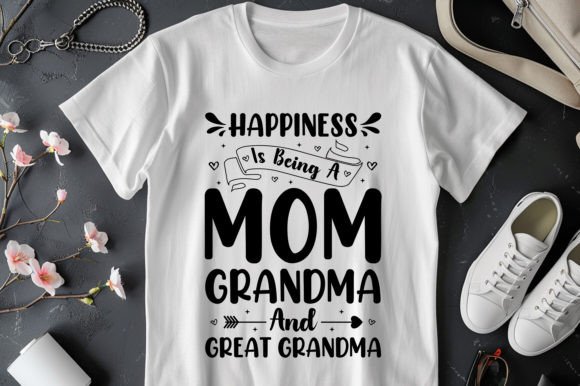
At first glance, Happiness is Being a Mom Grandma reads warmly, gently rounded in layout, with soft spacing and balanced hierarchy. It’s not aggressive or overly decorative—it leans into sincerity over sparkle. That matters. When you’re embroidering a nursery pillow or stitching a keepsake tea towel for a new great-grandmother, clarity and calm are part of the craftsmanship. The phrase flows left-to-right like natural speech, not a logo forced into symmetry. No extra flourishes distract from the message—and that’s intentional. In embroidery, simplicity often stitches cleaner, especially at smaller scales.
Where It Shines: Real Projects, Real People
I tested Happiness is Being a Mom Grandma on a medium-weight cotton canvas tote bag—my go-to for craft fair samples—and paired it with a light denim cap for contrast. On the tote, centered above the pocket, it read beautifully at 4.5 inches wide: legible, grounded, and emotionally resonant. Customers paused. Smiled. Asked, “Is that for sale?” That’s the sign of a working design—not just a pretty file.
It also translated well to a brushed cotton sweatshirt using a medium-density fill stitch and gentle satin border. No crowding, no bleeding. Because the letterforms aren’t ultra-thin or tightly kerned, they resisted distortion on slightly stretchy fabric—something I’ve seen derail many “cute mom” designs. As a machine embroidery design, it’s forgiving without being generic.
For baby embroidery? Yes—but with nuance. I ran it at 3.25 inches on a muslin swaddle blanket using tear-away stabilizer and 40-weight poly thread. The curves held. The “a” in “Grandma” didn’t collapse. But I’d skip it on newborn onesies under 24 months unless scaling down *very* carefully—the phrase has rhythm, but it’s not built for micro-hooping.
Where to Pause—and Why
Happiness is Being a Mom Grandma doesn’t hide its limits, and that’s refreshing. It’s not ideal for:
- Small hoop sizes under 3 inches—tight letter spacing starts to feel cramped, and fine details (like subtle curve endings) risk stitching inconsistently;
- Highly textured fabrics like heavy terry cloth or bouclé knits—without extra stabilizer layers, the text can float or snag;
- Dark, low-contrast thread on dark fabric—since the design relies on shape and proportion rather than bold outlines, it needs thoughtful thread color pairing;
- Curved surfaces like structured baseball caps—unless resized and re-digitized for crown curvature, the bottom line may pull or pucker.
It also isn’t an applique design. There’s no built-in background shape or layered elements—so if you’re planning embroidered patches or iron-ons, you’ll want to add your own border or backing in your embroidery software. That’s not a flaw—it’s clarity of intent.
What It Adds to Your Finished Product
This design quietly elevates handmade product perception. On a linen kitchen towel, it didn’t shout—it settled in, like something chosen with care. That builds trust: customers sense intention, not automation. For Etsy sellers, that translates to better reviews (“So much more elegant than other mom designs!”), higher perceived value, and repeat buyers looking for that same warmth in holiday embroidery or personalized gifts.
Brand-wise, it supports consistency without demanding it. Whether you sell modern nursery decor or rustic farmhouse aprons, Happiness is Being a Mom Grandma adapts—especially when paired with your signature thread palette or stitch style. It doesn’t compete with your voice; it complements it.
Practical Notes from the Hoop
Before stitching your first client piece—or listing it as a digital embroidery file—here’s what I do every time:
- Test on scrap fabric—same weight, same dye lot, same stabilizer combo you’ll use for the final piece;
- Check thread color contrast on both light and dark mockups—even if you only plan to use it on cream, seeing it on navy reveals hidden density issues;
- Review stitch density in your embroidery software—if fill areas look overly dense, reduce density by 5–10% for breathable fabrics;
- Confirm hoop size compatibility—the original PNG and vector files give flexibility, but your machine’s max hoop determines safe scaling;
- Inspect small details at 200% zoom: are terminals clean? Do letters connect smoothly? Does “Great Grandma” flow without awkward gaps?
- Use proper stabilizer—light cutaway for knits, tear-away for stable wovens, and avoid topping unless stitching on fleece or pile;
- Verify licensing—this is a T-Shirt Designs asset, but commercial embroidery rights depend on the seller’s terms. Always confirm before selling finished products or bundling as design assets.
Final Thought: A Quiet Workhorse
Happiness is Being a Mom Grandma won’t win awards for flash—but it earns respect for function, feeling, and finish. It’s the kind of embroidery file that disappears into the product while making the sentiment unmistakable. Whether you’re building a craft business, prepping for a holiday craft fair, or creating a one-of-a-kind personalized gift, this design doesn’t ask for attention. It earns it—stitch by steady stitch.