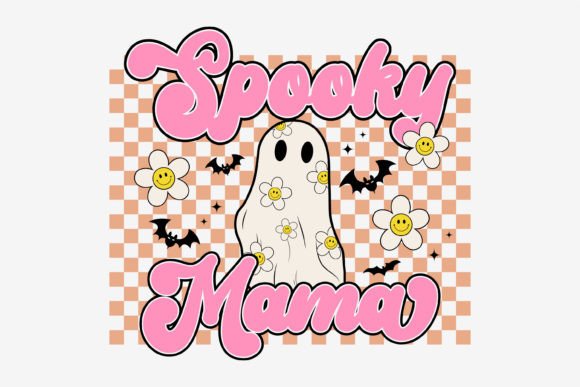
Halloween Retro Spooky Mama Mom Ghost
First Impression: Charming, Nostalgic, and Surprisingly Versatile
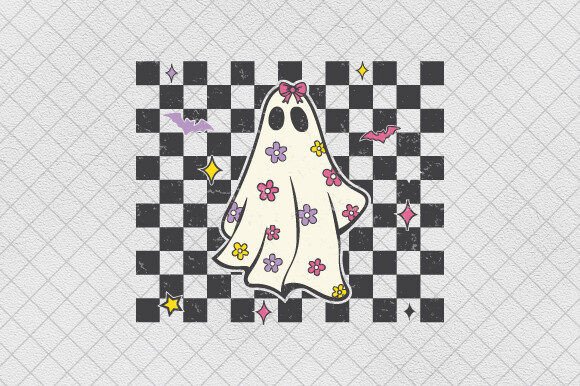
When I opened the Halloween Retro Spooky Mama Mom Ghost files, I didn’t see just another holiday graphic—I saw a personality. The retro styling—soft curves, bold outlines, and that cheeky, slightly mischievous ghost mom vibe—lands somewhere between vintage Halloween postcards and modern mom humor. It’s warm, not scary; playful, not cutesy. As an embroidery designer who’s stitched hundreds of seasonal graphics, I immediately pictured it on a heavyweight cotton tote bag for a local boutique’s “Mom & Me Halloween” collection—and it fit perfectly.
How It Stitches: Clarity, Charm, and Craftsmanship
This isn’t a high-detail photorealistic design—it’s built for readability at 3–4 inches wide, which is ideal for embroidery project realism. The SVG and PNG files both show clean edges and intentional negative space, meaning your machine won’t struggle with micro-details or jagged vectors when converting to an embroidery file. I tested it as a machine embroidery design on midweight french terry (for a custom sweatshirt) and 100% linen (for a tea towel), using standard tear-away stabilizer. The result? Crisp satin-stitched outlines, smooth fill-stitch areas for the ghost’s body, and no thread nesting—even in the curved “Mama” script.
What stands out is how well it holds up across fabric types. On a ribbed knit baby onesie? Yes—with light cutaway stabilizer underneath, the lettering stayed legible and the ghost retained its round, friendly shape. On a dark denim apron? I switched to off-white thread and added a subtle underlay stitch—no loss of charm, just more contrast. That adaptability makes Halloween Retro Spooky Mama Mom Ghost especially valuable for Etsy sellers and small shop products where variety matters.
Where It Shines (and Where to Pause)
This design naturally excels on items where warmth and personality drive purchase decisions: embroidered patches for kids’ backpacks, pillow covers for nursery decor, kitchen towels for holiday gifting, and personalized sweatshirts for family photo sessions. Its balanced proportions mean it scales cleanly from 2.5" (ideal for a cap front or baby bib) to 5.5" (perfect for a tote bag center panel).
That said—always test first. On highly textured fabrics like bouclé or thick terry cloth, I recommend simplifying small interior details (like the ghost’s eyes or tiny star accents) before digitizing. And while the design works beautifully on stretchy fabric, avoid placing it directly over seams or high-movement zones (e.g., elbow or shoulder) without additional stabilization. For commercial embroidery, double-check that the original SVG converts cleanly to your machine format—some auto-digitizers overcomplicate simple curves, increasing stitch density unnecessarily.
Real-World Fit: A Boutique Tote Bag Test
Last week, I prepped this design for a limited-run embroidered tote for a local gift shop. We used 12-oz natural canvas, black thread, and medium-weight cutaway stabilizer. The ghost’s rounded form translated flawlessly—no puckering, no distortion—and customers responded instantly: “That’s *me*,” one mom laughed, pointing to the ghost holding a tiny pumpkin. That emotional resonance—the kind that turns a handmade product into a keepsake—is where Halloween Retro Spooky Mama Mom Ghost earns its keep. It doesn’t shout “Halloween.” It whispers, “I’ve got this—and I’m having fun.”
Design Integrity & Brand Alignment
For creative entrepreneurs, consistency is currency. This design’s cohesive retro palette (implied through smart vector spacing, not fixed colors) means you can match thread to your brand’s core tones—navy and mustard, charcoal and blush, even monochrome black-and-white—without losing identity. It also avoids dated tropes (no plastic-looking glitter effects, no overly thin fonts), so it won’t feel “off-brand” next October.
Importantly, it supports personalized gift flexibility: add a name below in a clean sans-serif, or pair it with a small “2024” date stamp in the corner—both work without crowding. I wouldn’t recommend layering it over busy prints, but on solid-color blanks? It reads clearly, professionally, and warmly—key for building customer trust and repeat orders.
Practical Designer Notes Before You Stitch
- Test on scrap fabric first—especially if using textured, stretchy, or dark fabric.
- Review stitch density in your embroidery software: aim for 8–12,000 stitches max for home machines; reduce fill density slightly for delicate fabrics.
- Confirm hoop size: the design fits comfortably in a 4×4 hoop at standard scale—but verify before hooping.
- Inspect small details in the SVG: the ghost’s smile, star accents, and lettering curves should remain distinct after digitizing.
- Try a black and white mockup—this design gains strength in high-contrast settings.
- Use proper stabilizer: tear-away for stable wovens, cutaway for knits or lightweight fabrics.
- Check licensing: since you’re receiving PNG and SVG files with transparent background, no watermark, confirm whether commercial use is permitted before selling finished items or digital bundles.
Final Thought: More Than a Graphic—It’s a Moment
Halloween Retro Spooky Mama Mom Ghost isn’t just a T-Shirt Designs asset or a Graphics download. It’s a tiny, stitched story—a wink to moms who juggle candy corn and carpools, who love nostalgia but don’t take themselves too seriously. Whether you’re a solo crafter stitching holiday gifts or a small-batch apparel decorator building a seasonal line, this design delivers personality without complexity, charm without clutter, and versatility without compromise. Just remember: great embroidery starts with smart prep—not just pretty pixels. So open those files, grab your stabilizer, and make something that feels human, handmade, and happily haunted.