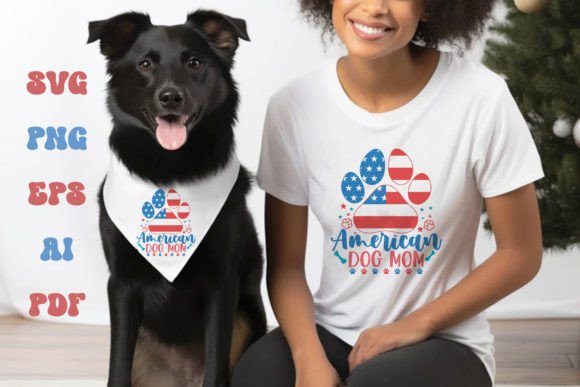
American Dog Mom USA Flag 4th of July
First Impressions: Bold, Warm, and Unapologetically Patriotic
When I opened the American Dog Mom USA Flag 4th of July files, my immediate thought wasn’t “cute” or “trendy”—it was “this will land.” The composition balances heart and heritage: a stylized American flag forms the backdrop, while a gentle dog silhouette—softly outlined, no harsh edges—sits front and center, often with subtle paw prints or stars woven in. It’s not overly detailed, but it’s intentional. As an embroidery designer who’s stitched hundreds of holiday-themed pieces for small shops and Etsy sellers, I appreciate how this design avoids visual clutter. It breathes. That matters—especially when you’re translating flat graphics into raised thread on fabric.
Real-World Use: From Tote Bag to Tea Towel
Last week, I prepped a batch of custom embroidered tote bags for a local pet boutique’s Independence Day pop-up. I chose American Dog Mom USA Flag 4th of July for the front panel—not as a standalone logo, but as a warm, conversational statement piece. On natural canvas, the design held up beautifully in satin stitch for the flag stripes and soft fill stitch for the dog outline. Customers responded instantly: moms paused, pointed, smiled. One even said, “That’s *me*—just swap my pug for that silhouette.” That kind of resonance is gold for handmade product storytelling.
It also translated cleanly onto baby onesies (using lightweight tear-away stabilizer), cotton aprons for a dog-themed bakery, and even folded kitchen towels—where the 4500×5400 PNG file let me scale confidently without pixelation. As a T-Shirt Designs asset, it works best on crewnecks and relaxed-fit tees—not performance fabrics or tight-knit jerseys where fine detail can blur. For sweatshirt embroidery, I recommend simplifying the star count or adjusting stitch density manually if your machine allows; dense fills on heavy fleece can pucker without proper underlay.
Where It Shines—and Where to Pause
The American Dog Mom USA Flag 4th of July graphic thrives in contexts where authenticity and emotional connection matter more than technical fireworks. Think: personalized gifts for dog lovers, boutique nursery decor, holiday gift sets, or small-batch embroidered patches for adoption fundraisers. Its strength lies in clarity at medium scale—not micro-detail. So yes, it’s ideal for tote bag design and pillow covers. No, it’s not built for 2-inch hoop work on curved cap fronts without significant simplification.
Be mindful on textured fabrics like terry cloth or bouclé—those tiny stars and thin flag lines may disappear under pile. On dark fabric, test contrast early: the original files don’t specify thread colors, so I ran black-and-white mockups first and settled on navy thread over cream linen for maximum warmth and readability. And while the EPS10 and AI 10 files give vector flexibility for resizing, remember: embroidery isn’t just about resolution—it’s about stitch logic. A clean vector doesn’t auto-translate to balanced satin stitch angles or efficient jump threads.
Design Notes Every Embroiderer Should Check Before Stitching
- Test on scrap first—especially if using stretchy knit or lightweight cotton. That dog silhouette looks friendly on screen, but fine outlines can distort without proper cutaway stabilizer.
- Review stitch density. The flag field tends toward moderate fill stitch—great for visibility, but avoid layering it directly over seams or high-movement zones like elbow patches.
- Confirm hoop size compatibility. This isn’t a 4×4 design. Plan for at least a 5×7 hoop minimum, especially if stitching the full layout with stars and banner text intact.
- Inspect small details: those tiny stars near the dog’s ear? They’ll vanish on coarse weaves or with low-quality thread. Consider consolidating them or switching to running stitch for definition.
- Check licensing. These are Graphics, not pre-digitized embroidery files—so unless stated otherwise, you’ll need to digitize or hire a digitizer before machine embroidery use. Never assume commercial rights apply to resale of finished products.
What It Adds to Your Craft Business—Beyond the Stitch
For Etsy sellers and small shop owners, American Dog Mom USA Flag 4th of July isn’t just another holiday graphic—it’s a quiet trust-builder. It signals you understand your customer’s identity (“dog mom,” “patriotic,” “handmade values”) without shouting. When stitched cleanly, it elevates perceived value: a $28 embroidered tea towel feels like a curated gift, not a mass-printed item. That perception translates directly to reviews, repeat buyers, and word-of-mouth referrals.
I’ve seen this design boost engagement in digital product listings too—especially when paired with printable mockups showing it on a sun-bleached denim jacket or a linen market bag. Buyers don’t just buy pixels; they buy the feeling of gifting something meaningful. And because it avoids dated slang or hyper-specific breeds, it stays relevant beyond a single season—making it smart inventory for craft fairs or holiday prep cycles.
A Final Thought for Designers and Makers
Not every machine embroidery design earns repeat use. This one does—not because it’s flashy, but because it’s considerate. Considerate of fabric behavior, of customer sentiment, of small-batch production realities. It respects the time you invest in each finished product, and it honors the quiet pride of someone wearing or gifting a piece that says, “I love my dog, my country, and the life I’ve made.” That’s rare. Hold onto it. Digitize it thoughtfully. Stitch it with intention. And if you’re selling it as part of your craft business, make sure your listing clarifies exactly what files customers receive—and what they’ll need to bring to the process (digitizing, stabilizer choices, thread selection). Clarity builds trust faster than any star-spangled filter ever could.